Comparison
Culinary Arts vs Baking and Pastry
Should You Study Culinary Arts or Baking and Pastry?
Baking and pastry schools train you for bread, viennoiserie, cakes and plated desserts, while culinary arts programs cover every station in a kitchen; 227 of the 962 verified programs are baking and pastry and 631 culinary arts. Pastry programs are often shorter and less expensive, such as Pinellas Technical College's 600-hour diploma at $1,752 in tuition, but the pay gap is real: chefs and head cooks earn a national median of $62,470 and bakers $37,160 (BLS OEWS, May 2025).
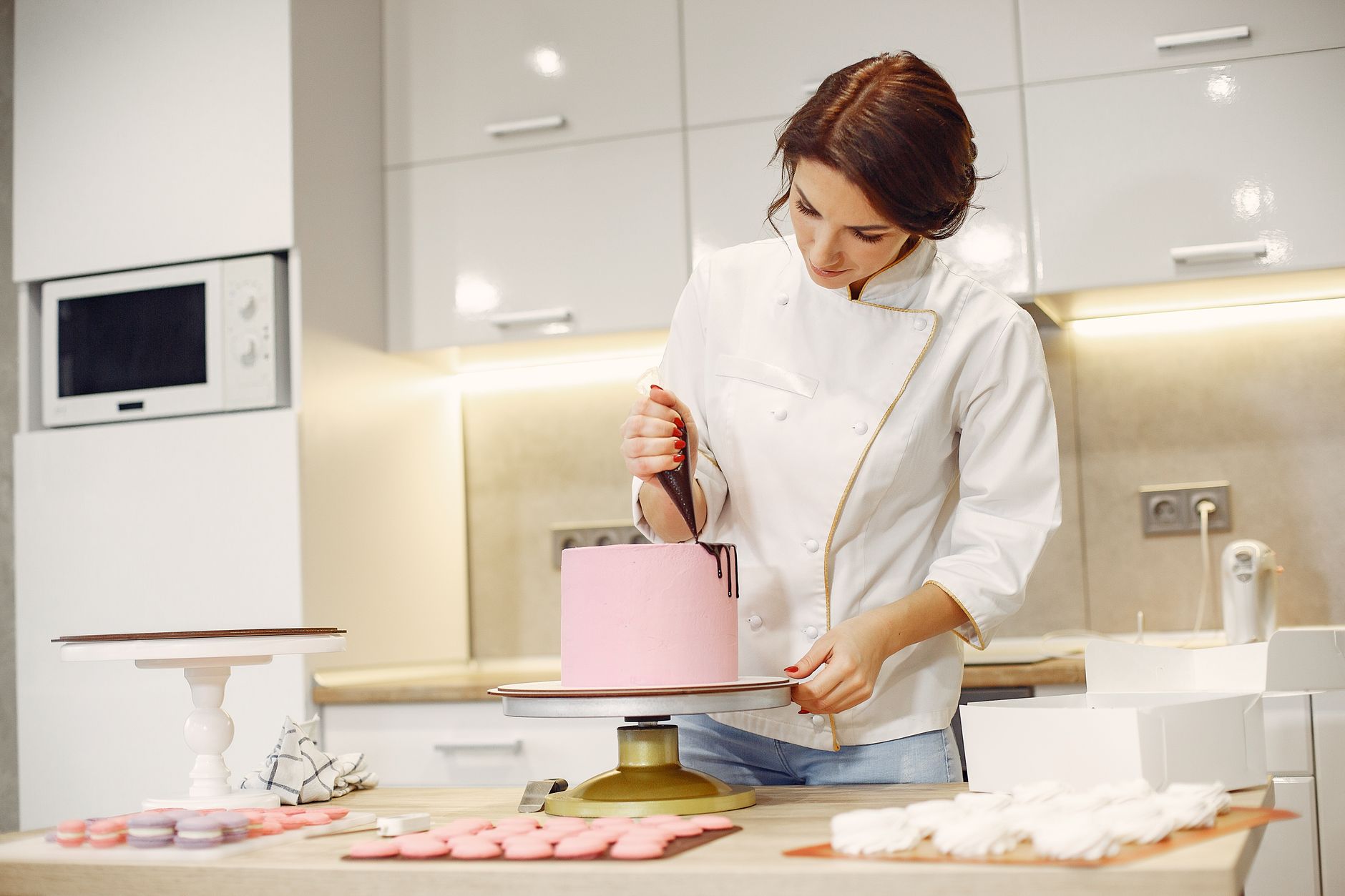
Culinary Arts and Baking and Pastry, Side by Side
The two tracks share a kitchen and a few first-term courses, then split. Culinary arts trains you to cook across every station: sauces, proteins, stocks, garde manger, the grill and the line during service. Baking and pastry goes deep on one corner of the kitchen: bread, laminated dough, cakes, chocolate, sugar work and plated desserts.
| Culinary arts | Baking and pastry | |
|---|---|---|
| Verified programs | 631 | 227 |
| What you learn | Every savory station, plus some baking | Bread, viennoiserie, cakes, confections, plated desserts |
| Kitchen rhythm | Fast, many orders at once during service | Precise, weighed, often early-morning production |
| First jobs | Prep cook, line cook | Baker, pastry cook |
| Senior roles | Sous chef, chef, executive chef | Pastry chef, executive pastry chef, bakery owner |
| Median pay (BLS OEWS, May 2025) | Chefs and head cooks: $62,470 | Bakers: $37,160 |
| ACF certification track | CC, CSC, CCC, CEC, CMC | CPC, CWPC, CEPC, CMPC |
The pay row needs context. The $62,470 figure covers chefs and head cooks, who supervise kitchens. The $37,160 figure covers bakers, who mix, shape and bake. If you want pastry pay closer to the chef figure, the route is supervision: running a pastry kitchen or a bakery rather than working one station in it.
Baking and Pastry Schools: Lengths and Costs
Pastry programs are often shorter than culinary arts programs, and many of the lowest published prices in culinary education are pastry certificates.
| School | Program | Length | Published cost |
|---|---|---|---|
| Dallas College, TX | Bakery/Pastry Foundations Certificate | 8 months | $1,584 in-county estimate |
| Pinellas Technical College-Clearwater, FL | Baking & Pastry Arts | 600 hours, about 6 months | $1,752 tuition; $2,237.96 books, supplies and fees |
| Tarrant County College District, TX | Baking and Pastry, Level 1 Certificate | 29 credits | $2,146 tuition and fees, in-county, 2026-27 |
| William T McFatter Technical College, FL | Baking and Pastry Arts | 600 hours, 8 months | $2,609 Florida resident total |
| Manatee Technical College, FL | Baking and Pastry Arts | 600 hours, about 6 months | $3,881 tuition, lab and fees, in-state |
| University of Arkansas-Pulaski Technical College, AR | Cake Decorating, Certificate of Proficiency | $4,500 approximate tuition and fees | |
| University of Arkansas-Pulaski Technical College, AR | Baking and Pastry Arts, A.A.S. | $19,600 approximate tuition and fees | |
| Dallas College, TX | Bakery/Pastry, A.A.S. | 2 years full time | $5,940 in-county estimate |
A blank cell means the program page gives no comparable figure for that column.
Compare that with culinary arts at the same schools. Dallas College’s Culinary Arts Foundations certificate is $1,782 against $1,584 for pastry. Tarrant’s Culinary Arts I certificate is $1,332 for 18 credits, its pastry certificate $2,146 for 29. The track changes the price less than the credential does.
What Each Track Leads to
Culinary Arts
Most culinary arts graduates start as line or prep cooks and climb toward sous chef and chef. The BLS projects chef and head cook employment to grow 7 percent from 2025 to 2035, with about 25,200 openings a year. Chefs and head cooks earn a median of $62,470, with the middle half between $48,440 and $78,750.
Baking and Pastry
Bakers mix ingredients according to recipes to make breads, pastries and other baked goods. The BLS says bakers typically need no formal credential and learn on the job, sometimes through an apprenticeship, and that shifts often include early mornings, nights, weekends and holidays. Employment is projected to grow 6 percent from 2025 to 2035, with about 36,500 openings a year. Bakers earn a median of $37,160, with the middle half between $32,660 and $44,360 and the top 10% above $49,020.
So a pastry program’s main value isn’t permission to work. It’s skill, speed to a better job, and the foundation for a pastry chef role or your own bakery.
Baking and Pastry Programs That Publish Results
| School | Program | Published result | Period |
|---|---|---|---|
| Delgado Community College, LA | Pastry Arts, Certificate of Technical Studies | Employed 10 of 10, 8 of 8 and 10 of 10; ACF certification rate 100% | 2025-26, 2024-25, 2022-23 |
| Dallas College, TX | Bakery/Pastry, A.A.S. | 100% placement each year; 21.3% completion within 4 years; ACF entry-level certification rate 0 | 2020-21 through 2023-24 |
Delgado’s numbers are the standout: three years of every pastry graduate employed and ACF certified. Dallas College shows the other side, the pattern seen across culinary programs: graduates get hired, but most students who start don’t finish within four years.
Culinary Arts vs Baking and Pastry: The Numbers
| Track | Programs | Median length | Median published total | ACFEF |
|---|---|---|---|---|
| Culinary arts | 631 | 52 weeks | $6,102 | 81 |
| Baking and pastry | 227 | 48 weeks | $3,960 | 27 |
| Culinary management | 84 | 80 weeks | $11,392 | 4 |
| Culinary science and nutrition | 11 | 65 weeks | 0 |
Chefs and head cooks: national median $62,470 (BLS OEWS May 2025). Bakers: national median $37,160 (BLS OEWS May 2025).
The ACF Pastry Certification Path
Pastry has its own American Culinary Federation ladder, parallel to the savory one, and it rewards the same education.
| Pastry level | What it takes |
|---|---|
| Certified Fundamentals Pastry Cook (CFPC) | High school diploma, GED or an ACFEF high school program; no experience; assessments waived for ACFEF graduates |
| Certified Pastry Culinarian (CPC) | No experience with a culinary arts associate degree, 1 year with a one-year certificate, or 2 years with a diploma plus 100 hours; exams waived for ACFEF graduates |
| Certified Working Pastry Chef (CWPC) | 3 to 5 years of entry-level work, including 2 years supervising a shift or station |
| Certified Executive Pastry Chef (CEPC) | Pastry chef in charge of producing baked goods, pastry or confection, with supervision experience |
| Certified Master Pastry Chef (CMPC) | Per the ACF’s master chef manual |
The education routes are written for culinary arts degrees and certificates, and pastry graduates of ACFEF-accredited programs skip the CPC exams just as culinary graduates skip the CC exams. Delgado’s 100% ACF certification rate for its pastry certificate shows what that looks like when a program builds it in.
Kits and Supplies by Track
Pastry tools cost about the same as culinary tools. University of Arkansas-Pulaski Technical College lists uniform and tools at $525 for its pastry programs and $500 for culinary arts, with books from $225 for Basic Pastry to $1,100 for either associate degree. Pinellas lists $2,237.96 in books, supplies and fees on top of its $1,752 pastry tuition.
Where to Study Baking and Pastry
The biggest names offer pastry degrees, but so do many public colleges.
- Private culinary schools. The Culinary Institute of America offers a Baking and Pastry Arts A.O.S. with an internship. Auguste Escoffier’s Boulder campus runs baking and pastry diplomas and degrees online and on campus, each with at least one externship.
- Community colleges with a full pastry degree. Scottsdale Community College offers a Baking and Pastry Arts A.A.S. and a Commercial Baking and Pastry certificate, plus a student restaurant. University of Arkansas-Pulaski Technical College holds ACFEF accreditation for its Baking and Pastry Arts A.A.S. and technical certificate.
- Short certificates. Cochise County Community College District runs a two-semester Culinary Baking & Pastry certificate, and the University of Alaska Anchorage a 19-credit Baking and Pastry Arts endorsement certificate.
- One degree, two concentrations. Delgado’s Culinary Arts A.A.S. lets you choose Professional Culinarian or Baking and Pastry Arts, so you don’t have to decide on day one.
The baking and pastry ranking scores every pastry program on accreditation, outcomes and cost.
How to Decide
Cooking versus baking comes down to how you like to work. If you like the rush of service, tasting and adjusting as you go, and a different plate every few minutes, culinary arts fits. If you like weighing to the gram, working ahead of the day, and seeing a batch come out right because the process was right, pastry fits. Spend a few shifts in each kind of kitchen before you choose if you can: the hours differ as much as the food.
- You love precision, early mornings and making things that look as good as they taste: baking and pastry.
- You want the widest set of jobs and the higher chef pay ceiling: culinary arts.
- You want a bakery of your own: a pastry program plus business or management courses.
- You can’t decide: pick a program with both concentrations, like Delgado’s, or start with a culinary arts degree that includes baking courses.
- Either way: check ACFEF accreditation and the program’s published results. The ACF-accredited ranking and the best culinary schools ranking cover both tracks, and the program comparer puts a pastry and a culinary program side by side.
Frequently Asked Questions
Is Baking and Pastry Harder Than Culinary Arts?
It's different. Pastry rewards precision, weighing and timing, while culinary arts rewards speed and juggling several dishes at once during service. Many programs, such as Delgado Community College's A.A.S., let you choose a Professional Culinarian or Baking and Pastry Arts concentration within the same degree.
How Long Is Pastry School?
From a few months to two years. Florida's technical colleges teach 600-hour baking and pastry diplomas in about 6 to 8 months, Dallas College's Bakery/Pastry Foundations certificate takes 8 months, and associate degrees such as Dallas College's Bakery/Pastry A.A.S. take 2 years full time.
How Much Do Bakers Make?
Bakers earn a national median of $37,160 a year, or $17.86 an hour, with the top 10% earning more than $49,020 (BLS OEWS, May 2025). Chefs and head cooks, who supervise kitchens, earn a median of $62,470.
Can You Get ACF Certified in Pastry?
Yes. The ACF's pastry track runs from Certified Fundamentals Pastry Cook and Certified Pastry Culinarian up to Certified Executive Pastry Chef and Certified Master Pastry Chef, with the same education routes as the savory track.
Which Baking and Pastry Programs Publish Results?
Delgado Community College's Pastry Arts certificate reports graduates employed 10 of 10 in 2025-26, 8 of 8 in 2024-25 and 10 of 10 in 2022-23, with a 100% ACF certification rate. Dallas College's Bakery/Pastry A.A.S. reports 100% placement and 21.3% completion within four years (2020 cohort).
Can You Study Baking and Pastry Online?
Partly. Pima Community College offers its Baking and Pastry Arts certificate on campus, hybrid or online, and Auguste Escoffier's Boulder campus runs online baking and pastry programs, each with at least one externship.
Keep Reading
- Certificates vs DegreesHow culinary certificates, diplomas, associate degrees and bachelor's degrees differ in length, credits, cost and what they lead to
- Online vs On CampusWhat you can and can't learn online in culinary school, the hybrid and online programs that exist, and how their hands-on hours work
- ACF AccreditationWhat ACFEF programmatic accreditation and institutional accreditation mean for a culinary program, how to check them, and which programs hold Exemplary status
- Culinary Schools Near YouHow to find the culinary schools near you, state by state and city by city, and what to compare once you have a shortlist
- Culinary School CostWhat culinary programs cost, from the totals and per-credit rates schools publish, plus knife kits, uniforms and what each figure covers
- Financial AidHow federal aid, state grants, employer support and culinary scholarships pay for culinary school, and which programs qualify
- Best Culinary SchoolsEvery verified program, ranked
- Culinary Schools by StateThe best programs in every state
Sources
- BLS OEWS May 2025: Bakers (51-3011)
- BLS OEWS May 2025: Chefs and Head Cooks (35-1011)
- BLS Occupational Outlook Handbook: Bakers
- American Culinary Federation: Certification requirements
- U.S. Bureau of Labor Statistics, Occupational Employment and Wage Statistics, May 2025: Chefs and Head Cooks (35-1011)
- U.S. Bureau of Labor Statistics, OEWS May 2025: Bakers (51-3011)